





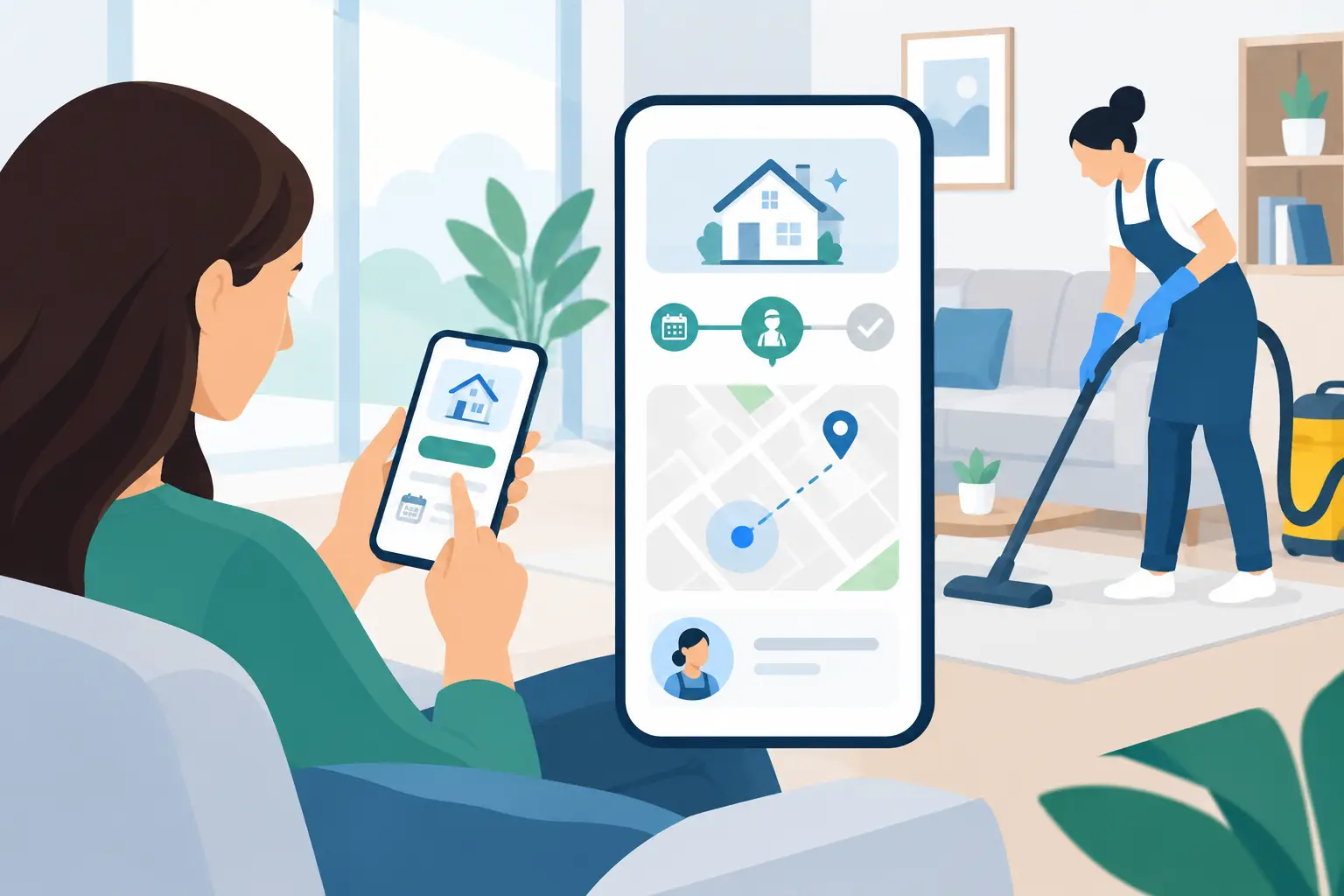
When a home needs attention, the hard part should not be tracking down a provider, waiting for a callback, or wondering what the final bill will be. Online house cleaning booking gives homeowners, renters, landlords, and business operators a more organized way to request service, review expectations, and stay informed from the first estimate through job completion.
That matters when life is already full. A working family may need recurring help without another weekly task to manage. A landlord may need a turnover clean scheduled between tenants. An office manager may need dependable service with a record of what was completed. In each case, a digital booking process replaces avoidable back-and-forth with clear next steps.
Why Online House Cleaning Booking Changes the Experience
Traditional cleaning coordination often begins with uncertainty. You call or send a message, describe the property, wait for a response, and hope the quote, schedule, and service details remain consistent. This approach can work for a simple one-time job, but it leaves too much room for missed details when a property has specific needs.
A professionally managed online booking experience creates a shared record. The customer can submit property information, select or request service, receive a transparent estimate, and manage account details in one place. The cleaning team receives the job requirements through an organized workflow rather than relying on scattered texts or handwritten notes.
That visibility is not just about convenience. It supports accountability. When service details, scheduling information, and job progress are available through a dashboard, everyone has a clearer understanding of what has been requested and what happens next. Customers spend less time following up, while cleaning professionals can arrive better prepared.
For property owners, this structure also helps distinguish a managed cleaning service from an informal arrangement. A dependable provider should have a process for booking, assigning work, communicating changes, and documenting completed jobs. Technology does not replace personal service. It gives personal service the structure needed to be consistent.
What a Good Online Booking Process Should Ask
A useful booking form should be detailed enough to produce a realistic estimate without making the customer feel like they are completing a long application. The goal is to collect the information that actually affects the work.
Property details create a clearer estimate
Square footage, the number of bedrooms and bathrooms, property type, and the condition of the space all influence cleaning time and staffing. A move-out clean for an empty apartment is different from recurring service in an occupied family home. A small office with daily foot traffic may need different attention than a quiet professional suite.
Customers should also be able to identify special requests, such as inside-cabinet cleaning, appliance cleaning, pet-related concerns, heavy buildup, or areas that need priority attention. Clear information at booking protects both sides. It helps the customer receive a more accurate estimate and helps the cleaning professional prepare for the actual scope of work.
Scheduling should fit real life
The best appointment time is not always the first available opening. Families may need service while they are at work. Property managers may need cleaning completed before a walk-through. Commercial clients may need work outside operating hours to avoid disrupting staff and guests.
Online scheduling makes these needs easier to communicate early. Availability can be reviewed before an appointment is requested, and service notes can explain access instructions, gate codes, parking considerations, or contact preferences. If a change is needed, an account-based system provides a clearer path than trying to locate an old message thread.
Expectations should be easy to review
A booking experience should state what service includes, what may require an additional charge, and what customers should do before the team arrives. Transparent estimates are especially valuable here. They give customers an opportunity to review the anticipated service instead of being surprised after the work is complete.
No estimate can account for every unknown. A property with severe buildup, undisclosed construction dust, or significant clutter may require more time than a standard service. A responsible process makes room for those exceptions rather than pretending every property can be cleaned under the same conditions. Clear communication before work begins is a sign of respect for the customer and the cleaner.
From Estimate to Completion: What Visibility Looks Like
Booking online should not mean submitting a form and hoping for the best. The strongest systems continue to support the customer after the appointment is scheduled.
A customer dashboard can keep account information, appointment details, service history, and job updates together. This is particularly helpful for recurring clients and property managers who may oversee several locations or units. Instead of rebuilding the same request every time, they can manage cleaning as an ongoing operational need.
Real-time service tracking adds another layer of confidence. Depending on the service model, customers may be able to see appointment status, receive progress updates, and confirm when a job has been completed. That information is valuable when the customer is away from the property or coordinating access with another person.
Behind the scenes, a structured platform also supports cleaners and administrators. Cleaner dashboards can provide job details and completion workflows. Administrative tools can help manage leads, scheduling, customer communication, and service records. When those workflows are organized, customers are less likely to feel the effects of missed handoffs or unclear assignments.
At So Fresh & So Clean Clean, this type of platform-centered approach reflects a commitment to service that is both efficient and values-led. Accountability is not an extra feature. It is part of caring for a customer’s home, workplace, time, and trust.
Booking Needs Differ by Property Type
Online house cleaning booking is flexible, but the right service plan depends on the property and the reason for cleaning.
For a homeowner, recurring service may be the best fit when weekly responsibilities leave little time for deep, consistent upkeep. The benefit is not only a cleaner home. It is having a predictable plan for bathrooms, kitchens, floors, dusting, and the areas that tend to fall behind during busy weeks.
For renters, a one-time or move-out appointment may carry higher stakes. Lease requirements, inspection dates, and security deposits make the scope of cleaning especially important. Renters should provide the move-out date and review the requested tasks carefully, particularly if appliances, cabinets, or interior windows need attention.
Landlords and property managers often need speed, documentation, and repeatability. Turnover schedules can be tight, and a delayed clean can affect maintenance work, photography, showings, or a new resident’s move-in date. A booking system with service records and clear status updates helps property teams coordinate more confidently.
Commercial clients need consistency above all. A retail space, office, clinic-adjacent environment, or small business may require service at set intervals and at times that protect normal operations. The booking process should account for access rules, security procedures, high-traffic areas, and the desired cleaning frequency. A lower price may not be the best value if it comes with inconsistent arrival times or unclear service oversight.
How to Prepare for a Better Cleaning Appointment
A cleaning team can work more effectively when the property is accessible and the priorities are clear. Before the appointment, customers should secure valuables, pick up items that block major surfaces or floors, and make sure cleaning professionals can enter as arranged. This is not about making the home clean before it is cleaned. It is about allowing the team to focus their time on the services that were booked.
If there are pets, health concerns, fragile items, alarm instructions, or areas that should not be entered, include those notes during booking or update them before the appointment. A respectful cleaning provider will treat those details as part of the job, not as an inconvenience.
For recurring service, it also helps to revisit priorities occasionally. Household routines change. A guest room may become a nursery, a home office may need more frequent attention, or a business may expand into another suite. Digital account management makes those adjustments easier to document and apply to future appointments.
A well-run cleaning service should leave customers with more than a tidy space. It should leave them with clarity about what was scheduled, confidence in how the work was managed, and a simple way to plan the next service when they need it.